
Showing posts with label dakar senegal. Show all posts

Friday, March 15, 2013

The King of Morocco visit to Senegal


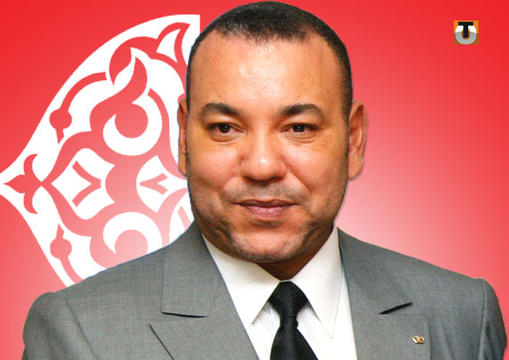
Mohammed-VIThe King of Morocco is starting as of Friday March 15 an official visit to Senegal, first leg of an African tour that will also take him to Gabon and Cote d’Ivoire.
The visit to Senegal is not a surprise to anyone, as has always included the Dakar phase in his trips to Africa.
Thus, in 2001, just two years after coming to power at the demise of his father, the King paid a state visit to Senegal. In June 2004, the Moroccan king paid a second visit to Senegal part of an African tour that also led him to Benin, Cameroun, Gabon, and Niger. Less than a year later, in the spring of 2005, during a tour that and also included Burkina Faso, Gabon, and Mauritania, King Mohammed VI was again received in Senegal as an official guest.
In November 2006, the king will pay a work visit to Dakar, his fourth to Senegal in just five years.
Each of these visits provided opportunity to consolidate further the historical longstanding relations binding Morocco and Senegal, to sign more cooperation agreements, and to give a new momentum to investments, both at the level of state-owned companies and at the level of the private sector.
Economic relations between the two countries are described as very good and according to 2011 figures, Senegal was Morocco’s leading trade partner in West Africa with a volume estimated at $122 million.
This bilateral cooperation is not limited to the trade and economic sectors only but also covers education and training. Hundreds of Senegalese students are attending Moroccan Universities and other higher institutes with grants from the Moroccan Government. Many Senegalese civil servants and even military also benefit from training and refreshing courses in Morocco.
The two countries are also bound by strong historical and religious ties
and the followers of the Tijani confraternity regularly come to Morocco to visit the Mausoleum of Sheikh Sidi Ahmed Tijani, the founder of this soufi confraternity, who is buried in Fes.
Besides these very strong economic, cultural and spiritual ties, Morocco and Senegal have established a political partnership that defies time and men. Whether Senegal is ruled by a Leopold Sedar Senghor, a Abdou Diouf, a Abdoulaye Wade or a Macky Sall, the country has always been keen on preserving its firm political ties with the North African kingdom, and Morocco, under the reign of the late Mohammed V, the late Hassan II or under the reign of King Mohammed VI has always endeavoured to upgrade its privileged partnership with the West African country.
This fifth royal trip to Senegal is providing a new opportunity to the two heads of state to reiterate their mutual commitment to the everlasting, outstanding relations binding the two countries.

Author Geraldine boexhat

Posted by  on March 15, 2013. 

United States Dedicates New U.S. Embassy in Dakar, Senegal


United States Dedicates New U.S. Embassy in Dakar, Senegal


In an important symbol of America’s commitment to an enduring friendship with Senegal, U.S. Ambassador to the Republics of Senegal and Guinea-Bissau, Lewis Lukens, dedicated the new U.S. Embassy in Dakar today. Occupying a 10-acre site near Pointe des Almadies, the $181 million multi-building complex provides a centralized location for the mission, as well as a state-of-the-art, environmentally- sustainable workplace for embassy personnel.
The architect of record for the project was Page Southerland Page of Arlington, Virginia, and B.L. Harbert International, LLC of Birmingham, Alabama, was the construction contractor.
The new facility incorporates numerous sustainable features to conserve resources and reduce operating costs, most notably an extensive system of 1,290 photovoltaic panels; solar control shading devices to reduce solar heat gain and energy cooling costs; and on-site treatment of wastewater that is reused for irrigation. The facility has been registered with the U.S. Green Building Council for Leadership in Energy and Environmental Design (LEED®) with enough points to earn LEED Gold certification.
Since 1999, as part of the Department’s Capital Security Construction Program, OBO has completed 97 new diplomatic facilities and has an additional 37 projects in design or under construction.
OBO’s mission is to provide safe, secure, and functional facilities that represent the U.S. Government to the host nation and support our staff in the achievement of U.S. foreign policy objectives. These facilities should represent American values and the best in American architecture, engineering, technology, sustainability, art, culture, and construction execution.

Tuesday, January 1, 2013

Delta Air Lines Responds to Increased U.S.-Africa Demand


With air traffic between the United States and Africa growing at more than 5% annually, the United States air carrier Delta Air Lines is steadily increasing its flights to the continent in response to strong customer demand.


In an October 4 interview, Landers attributed that growth to three key factors: strong economic growth across the African continent, the large number of African-born American citizens who are now traveling back and forth to Africa on personal and business travel, and increased investment in the continent’s oil and natural resource industries. “All of those together are driving growth,” he said.

Although Africa is growing from a fairly small base in comparison to Europe, Asia or other developed markets, Landers said, “in percentage terms, Africa is probably one of the fastest-growing markets in the world.”

“There has been an underserved U.S.-Africa demand for many years that historically has not had many options for service other than circuitous routings through Europe,” Landers said. “We began to fill that void in 2006” by beginning service to Johannesburg from Atlanta via Dakar. “Now that flight operates nonstop and has been very successful.”

Delta announced September 29 that it will add an eighth destination to its Africa route network with direct service between the United States and Luanda, Angola. Delta has grown from 22 weekly departures to and from Africa in the summer of 2007 to nearly 80 for the same time this year

.

With its winter 2010–2011 schedule, Delta will operate flights to eight African destinations: Accra, Ghana; Abuja, Nigeria; Cairo, Egypt; Dakar, Senegal; Johannesburg, South Africa; Lagos, Nigeria; Luanda, Angola; and Monrovia, Liberia. Delta also intends to serve Malabo, Equatorial Guinea, and Nairobi, Kenya, once additional U.S. government approvals are received.

“With our entrance to Angola via Dakar, we once again will serve Senegal from both Atlanta and New York, creating another double gateway to Africa with service from two hubs in the United States,” Landers said. Delta also serves Accra from New York and Atlanta. Monrovia is an emerging destination, currently visited one day a week via Ghana. Landers said the Monrovia flight is playing an important role in helping Liberia to rebuild and he voiced hope that its frequency will be expanded in the near future.

Africa is critical to Delta Air Lines because “having a diverse flight network is important,” Landers said. “When there are economic downturns in other regions of the world, our business goal is to be diversified across all the continents to protect ourselves from regional downturns.”

“One of the great things about airlines is that our assets are mobile, so if situations require the adjustment of our network it is very easy to do so. But, by and large, we have been very pleased with Africa over the last four years.

“When we first entered the market, we immediately saw load factors, or the percentage of our seats filled, at 80 percent or greater, and that led us to continue to expand across the continent.

“In July 2007, Delta had 97 departures to Africa from the U.S. In July 2010, we had 320, so we tripled in size in three years,” Lander said. “We believe our hubs give us the right strength. New York has a very large local market [of people wanting to travel to Africa] and Atlanta, being the world’s largest passenger hub, gives us the ability to connect pretty much every community in America to Africa with one stop.”

Americans traveling to Africa, he said, choose Delta for time savings. “If you look at the Atlanta-Johannesburg nonstop rather than connecting in Europe, you save an average of six hours in each direction. So on a roundtrip we are giving 12 hours back” to the traveler, he said. “There is great benefit to more direct routings to Africa.”

Helping to pave Delta’s expansion into Africa have been many of its employees, some of whom were formerly with Pan American World Airways, Landers said. Delta acquired Pan Am’s trans-Atlantic routes in 1991 when the airline ceased worldwide operations.

(On May 20, 1939, Pan Am launched the first U.S. passenger air service to Europe. As the United States entered into World War II, Pan Am began providing military transport of U.S. troops into Europe, Africa and Asia. As the war ended, Pan Am went on to establish passenger and cargo routes throughout the continents of Africa, Europe, Asia and Latin America and became one of the world’s premier international airlines before its demise.)

“We have a lot of people with many years of experience in developing African markets and who are very familiar with the business environment and how to be successful in Africa, and that has paid off for us. … Pan Am really paved the way to Africa.”

Landers said Delta is expanding its partnerships with African airlines. Kenya Airways is now a full-fledged member of the Sky Team Alliance and Landers said Delta is working with other African carriers such as Air Nigeria and TAAG Angola to explore and expand code sharing (allowing single bookings across multiple airlines).

Friday, May 25, 2012

Sandaga Market - Dakar Senegal

Marche Sandaga -
Sandaga Market

The bustling Sandaga market is in a  dusty off-pink three-story building structure ...whose style echoes the spired terre battue (earthen-floored) markets and mosques of the Sahel. Located at the corner of Avenues Pompidou and Lamine Gueye Sandage is a truly African marketWander among its labyrinth of stalls selling everything from fruits and vegetables to fabrics and electronics.
You will also have the opportunity to buy a variety of handicrafts and souvenirs. Outside the market, the avenue Emil Badiane is also filled with vendors.
.
Senegal Souls HomePage

Kermel Market - Dakar Senegal

-Marché Kermel-

Marche' Kermel
The original Victorian style building constructed in 1860 burnt down in 1994, but the 1997 reconstruction has been closely modelled on the building's initial structure and decoration.
The covered Marché Kermel, behind Av Sarraut and within walking distance of Marché Sandaga. Marche Kermel is a popular market in Dakar. It is famous not only for its large variety of food and souvenirs sold: it is also known as a beautiful landmark because its building is a splendid piece of art.

Marche' Kermel-Original

Designed by the same Victorian architects that designed the Dakar train station.


At the Marche' Kermel you can find all types of European foods, all beautifully presented.  Here you will find modern shops such as butchers and spice stalls. 
Marche Kermel
Cows are butchered in front of customers,  lobster and shrimp try to escape boxes, and fresh fruit and vegetables abound. Around this market people are selling flowers, alongside small crafts shops selling straw/cane articles, wooden sculptures and leather goods.


Sunday, May 20, 2012

Cathedral of African Remembrance - Dakar Senegal

Cathedral of Our Lady of Victories

Aka...
The Cathedral of African Remembrance

Cathedral of African
Remembrance
At the end of WW1 Bishop Jalabert living in Paris was named vicar general of Dakar. He was given the . mission to raise funds to build the Cathedral of African Remembrance under the patronage of Our Lady of Victories. It is located on Boulevard de la République in the area of Dakar-Plateau . The sanctuary is built on the site of an ancient cemetery Lebu (Muslims).  The land was  granted to the Catholic Church by the government. The cathedral was consecrated February 2, 1936 by Cardinal Verdier , Archbishop of Paris.

Cathedral of African
Remembrance
The funeral of former President Leopold Sedar Senghor was celebrated there in 2001 .
Cardinal
Hyacinthe Thiandoum ,who died in 2004 , is buried in the back of the altar, near the statue of Our Lady of Victories, patron saint of the cathedral

 
 This beautiful Catheral was recently restored. Designed by architect Charles-Albert Wulffleff ,it draws its inspiration from multiple sources: Sudan style towers and Byzantine domes and terraces.


 A vast dome lit by twenty windows occupies the center of a building like a Greek cross . Porticos 

extending three arms of the cross. The choir , surrounded by a walkway giving access to five chapels, is the fourth.


Face of a Angel
On the facade of the cathedral you will see the angels by famous sculptress  Anna 
Quinquaud whose features are inspired by the Fulani tribe. Materials from Africa was used... pink sandstone from Sudan , marble from Tunisia , wood from Gabon , and carpet Ouagadougou carpet.
 On the large entrance portico, flanked by two towers, was displayed in capital letters the following inscription: "In the dead of Africa grateful France". Now the original text has been replaced by another: "To the Virgin Mary Mother of Jesus the Savior."


Visit the website of The Archidiocese of Dakar 

Day Trips and Things to do in Dakar

Senegal Soul Home Page

Monday, January 16, 2012

Marche' HLM African Fabric Market Dakar

HLM African Fabric Market
Marche' HLM African Fabric Market Dakar

On Dakar’s streets, you will see people in handsome-tailored ensembles cut from colorful fabrics. But almost none of the city’s ready-to-wear shops sell traditional clothing. To get and outfit first you must head to the Marche' HLM Dakar's African fabric market.

Marche' HLM, " HLM is pronounced " ash-el-em and stands for Habitations a Loyer Modere, Meaning  affordable Rent Housing." Opened in 1976, this African fabric market has become one of the largest  African markets in West Africa. In recent years, it has becames a favorite destination for Senegales . They can find cloth at the best possible prices.

Marche HLM ," smaller market than Sandaga African 

HLM African Fabric Market

Market,"is  geared primarily towards  African fabric vendors, Marche HLM is slightly less crazy than Sandaga. You will find an endless selection of African fabric that you can buy and then get custom tailored into traditional or modern outfit of you choice. Senegalese fabric vendors usually won't sell less than 3 to 6 meters of fabric. A reasonable price is 1000CFA/meter.
HLM African Fabric Market

You have your choice from hundreds of rolls of wax-dyed bazin (dyed fabrics beaten to a shine with wooden clubs), vibrant prints, embroidered cloth, lace and silk. You can get matching shoes, bags and jewellery at the same place.